

Growing Momentum Toward Water and Energy Cooperation in Central Asia
- 09.01.2026
- Yazar:Dursun Yıldız
- (0) Yorum
Growing Momentum Toward Water and Energy Cooperation in Central Asia
Dursun Yıldız
Director
Hydropolitics Academy Center-Türkiye
January 9 2026
1. Introduction
Water resource management has become a critical political and strategic issue in Central Asia since the collapse of the USSR. The core of this challenge lies in the tension between upstream countries like Kyrgyzstan and Tajikistan, which possess abundant water resources but lack energy, and downstream countries such as Uzbekistan, Kazakhstan, and Turkmenistan, which are rich in energy but depend on upstream water for irrigation. This asymmetry creates both potential for conflict and a pressing need for cooperation, setting the stage for a complex narrative of conflict and collaboration. The ongoing challenge is coordinating the hydroelectric dams upstream with the irrigation systems downstream, both of which were inherited from the USSR. Drought conditions in downstream nations and the necessity for upstream hydroelectric projects have intensified the need to explore cooperative solutions.
New hydroelectric projects in Kyrgyzstan are expected to reduce regional tensions and promote hydropolitical cooperation. On August 12, 2025, the Kyrgyz government announced the Kazaraman (912 MW) and Kokomeren (1305 MW) projects on the Naryn River. These six plants will cost $6.2 billion and provide a combined capacity of 2,217 MW. The projects are considered essential for the Zangezur Corridor, the Middle Corridor, and China's Belt and Road Initiative. Experts note that improved energy infrastructure will help align transportation and energy corridors in Central Asia.
Keywords: Central Asia,Water-Energy,Hydropolitics,Hydro Diplomacy, Energy, Nexus,
2. Growing Regional Cooperation Around Sustainable Water Management and Energy
With grant funding from the French Development Agency (AFD), Kazakhstan and Uzbekistan have launched a joint initiative to revise irrigation regimes in the Syr Darya River basin. Coordinated by the Executive Committee of the International Fund for Saving the Aral Sea, the project aims to optimize agricultural water use and improve environmental outcomes, according to the Ministry of Water Resources and Irrigation of Kazakhstan (1).
Talgat Momyshev, Kazakhstan’s Deputy Minister of Water Resources and Irrigation, noted that the Aral-Syr Darya basin supplies water to over 35% of Kazakhstan’s irrigated land, with 98% of withdrawals used for agriculture. He emphasized the urgency of revising hydro modular zoning, which has not been updated in four decades. “The existing zoning does not account for major changes in climate, soil conditions, and land reclamation status over the past 40 years. A revision is essential,” he said (1).
The Syr Darya and Amu Darya rivers are vital for irrigating agricultural land throughout Central Asia. At a November meeting in Ashgabat, ICWC members from Kazakhstan, Kyrgyzstan, Tajikistan, Turkmenistan, and Uzbekistan approved new water distribution quotas for the non-growing season from October 1, 2025, to April 1, 2026.
During the non-growing season, water is stored in reservoirs to meet irrigation needs for the following spring and summer. For the Syr Darya River, the total withdrawal quota for this period has been set at 4.219 billion cubic meters, allocated as follows:
- Uzbekistan: 3.347 billion m³
- Kazakhstan: 460 million m³ (via the Dustlik Canal)
- Tajikistan: 365 million m³
- Kyrgyzstan: 47 million m³
This revision effort highlights increasing regional cooperation on sustainable water management in one of Central Asia’s most critical river basins (1).

2.1.Practical Water Cooperation Steps in the Region
In 2025, Central Asia faced a low-water year, with inflows into the Syr Darya River, which supplies Kazakhstan’s Turkestan and Kyzylorda regions, at only 30-40% of normal levels. (Kazakhstan Environment, 2025) On August 5, 2025, Kyrgyzstan and Uzbekistan agreed to release about 600 million cubic meters of water to Kazakhstan over the following two weeks to help offset shortages in the southern regions. This timely release was crucial in preventing widespread crop failures, sparing thousands of hectares of farmland from severe drought impacts and thereby securing the livelihoods of farmers dependent on these fields for their income and sustenance(12).
At the November 2025 meeting, Central Asian nations also reached consensus on projected water inflows to the Shardara Reservoir for the upcoming non-vegetation period (3).
Participants reviewed the 2025 irrigation season and approved the operational forecast for the Naryn-Syr Darya reservoir cascade for the 2025-2026 non-vegetation period. They also agreed on expected inflow volumes to the Shardara Reservoir, a critical node in the region’s transboundary water system (3).
Nurzhan Nurzhigitov, Kazakhstan’s Minister of Water Resources and Irrigation, stated that “Last irrigation season took place under difficult climate conditions. However, coordinated cooperation among the ICWC member states enabled stability throughout the vegetation period. Through such meetings, we reach common agreements and lay the foundation for future cooperation. Together with our colleagues in Central Asia, we aim for a fair distribution of transboundary water resources that considers the interests of all parties.”(3).
Seasonal demands for agricultural water downstream and energy upstream have caused tensions over dam operations on transboundary rivers. Recent water-energy swap agreements, in which upstream countries release water in summer and receive natural gas or electricity in winter, along with joint efforts on the Kambarata 1 Dam and other cooperative initiatives, have helped build regional trust (11). The water-energy swap agreement signed by Kyrgyzstan, Kazakhstan, and Uzbekistan on September 14, 2025, is expected to further improve hydropolitical relations (8).
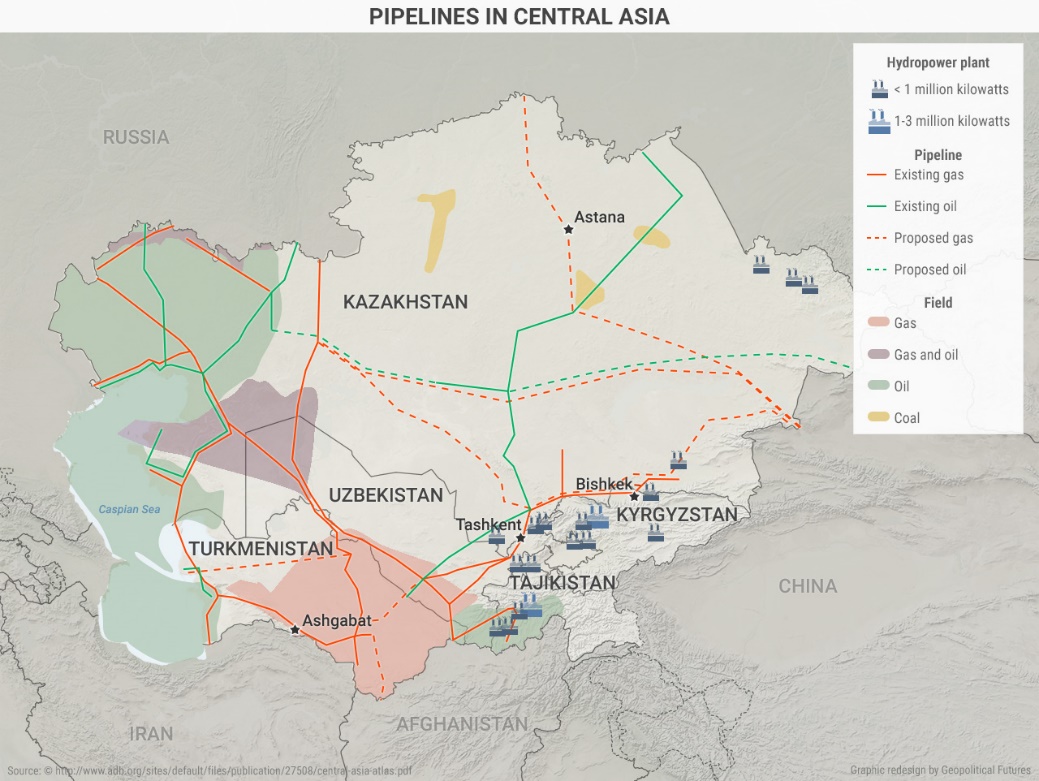
2.2.Single Gas Ring to Link Regional Energy Systems
A proposal to connect the five Central Asian capitals into a unified, synchronized gas network has generated widespread debate among regional energy experts following a major industry forum in Tashkent. The "Central Asia Gas Ring," introduced by Kazakh oil and gas analyst Askar Ismailov during the Central Asia Oil & Gas Forum in early November (2), offers several strategic advantages over upgrading bilateral pipelines. Its integrated design enhances energy security by providing redundancy and alternative routes in the event of disruptions. The collective development cost is likely lower than the sum of multiple separate upgrades due to economies of scale. The network also promises improved efficiency in managing seasonal demand fluctuations and strengthens the region's bargaining power through a unified energy infrastructure.
The concept envisions physically linking the gas transportation systems of Uzbekistan, Kazakhstan, Turkmenistan, Kyrgyzstan, and Tajikistan into an integrated regional ring. This model is based on the existing Central Asian Unified Power System, which already enables cross-border electricity coordination (2).
The system could help countries better manage seasonal demand fluctuations and reduce the risk of widespread energy shortages. The proposed system could also ensure more stable gas flows to Kyrgyzstan and Tajikistan, which lack significant domestic hydrocarbon resources and frequently experience shortages.
The proposal promises greater energy security, which is essential for long-term economic and social development. External stakeholders, including China and the European Union, are expected to show interest in financing the project (9).
The total cost is estimated at $4 billion to $5 billion, with most funding required to modernize aging Soviet-era pipelines and construct select new infrastructure segments (2).
Natural gas is not only a tradable resource but also a strategic tool for regional integration and energy security, particularly amid increasing geopolitical volatility.
4.The Key to Cooperation in the Region: Nexus
A broader regional development vision will enable win-win cooperation among Central Asian countries. Effective cooperation requires addressing water and energy together. Recent developments show that water management, once a source of tension, is now fostering collaboration. The Nexus approach, which links water, energy, food, and the environment, is gaining traction and supports both hydropolitical relations and socio-economic stability. To implement the Nexus approach, a three-step roadmap is recommended: integrate regional data systems for efficient information sharing, conduct joint planning sessions to align objectives, and pursue shared financing for joint projects. This structured method helps move from theory to practice. International organizations such as the World Bank, the US, and the EBRD increasingly require the Nexus approach, further encouraging regional cooperation. (Regional Cooperation Reduces Poverty and Builds Resilience in Central Asia, 2023)
The pursuit of water-energy cooperation in Central Asia is transforming hydropolitical relations. Water management, once a potential source of conflict, has now become a driving force for regional cooperation, confidence-building measures, and economic integration. As the geopolitical importance of water increases under the pressure of climate change in the 21st century, water-energy cooperation has become a strategic necessity for Central Asian countries, not only for development but also for peace and security. However, potential climate-induced hydrological uncertainties pose significant challenges to maintaining this cooperation. In Central Asia, concepts such as water-energy exchange, cooperation, and the development of regional energy and water-efficiency projects are gaining acceptance (10).
While these concepts support national and regional development, financial, technical, and political challenges remain. Securing consistent funding is difficult, especially for countries with limited budgets. Outdated infrastructure and a shortage of skilled workers hinder project implementation. Regional disputes and differing national priorities also impede cooperation. Despite these obstacles, momentum for collective water and energy solutions in Central Asia is growing. To sustain this progress, countries should consider specific policy actions. Investments in capacity building can develop a skilled workforce to maintain and upgrade infrastructure. Legal harmonization across countries would facilitate smoother cooperation and project execution. International collaboration through regional treaties can ensure shared goals and resource allocations. Joint funding initiatives from international donors could help alleviate financial pressures. By prioritizing these steps, countries can develop and implement effective hydropolitics and water-energy diplomacy strategies.
5. Geopolitical Risks in 2026
Central Asia began 2026 with relative stability, supported by improved regional coordination and the absence of immediate interstate conflict. However, structural pressures persist, including demographic changes, resource use, and vulnerability to external geopolitical influences. The region is managing these risks but has not eliminated them.
Political stability in the region has improved, but structural vulnerabilities remain. Recent water management agreements and joint statements have reduced tensions and fostered diplomatic trust and regional solidarity. Sustaining this progress requires continued political commitment, as fundamental challenges in water allocation and economic disparities persist.
Downstream states depend on reliable water allocations for agriculture and industry. While recent agreements have reduced immediate risks, seasonal shortages and inadequate management remain concerns.
Central Asia's position between major regional and international actors shapes its geopolitical landscape. The region has traditionally managed external influence through multi-vector foreign policies, seeking economic benefits while avoiding formal alliances. This strategy should continue, supported by innovative hydrodiplomacy, the Nexus approach, and a shared regional development vision. For example, the successful collaboration on the Rogun Dam project in Tajikistan demonstrates a balance between Chinese and EU interests, as both parties contributed to the funding and technical expertise required, while respecting Tajikistan’s sovereign decisions (7). Such cooperative initiatives should be encouraged as part of this multi-vector strategy to boost both regional integration and international trust.
6.Conclusions
Central Asia's previous water diplomacy has not eliminated vulnerabilities to political instability, climate shocks, or competing national interests. Although several agreements have been signed, implementation remains insufficient. For instance, the 2013 agreement aimed at improving water distribution amongst Uzbekistan, Kyrgyzstan, and Tajikistan stalled due to funding shortages and disagreements over allocation priorities, highlighting the challenges in turning diplomatic commitments into tangible actions. (Tynan, 2014)
Central Asian countries should avoid managing transboundary waters in isolation or by sector. Water should be treated as a resource that, when combined with others, supports regional and national development. Countries should view water as a tool for cooperation within broader development initiatives.
The region’s water management paradigm must shift away from viewing water as a matter of sovereignty. Water should be recognized as an essential resource, equitably shared among countries. Hydrodiplomacy should align with these new objectives. Establishing a reliable data collection and evaluation system, along with a Multi-Disciplinary Water Science Center, is recommended. This center should focus on data sharing, joint planning, notification mechanisms, and the development of the most suitable policies for the region regarding the water-energy-food nexus. A comprehensive data-sharing protocol should be developed, including minimum datasets on streamflow, reservoir storage, and hydropower output. Standardizing data formats will support practical implementation and promote transparent, equitable resource management.
Despite some progress in interstate relations, structural challenges remain unresolved. Water scarcity, climate variability, and unequal access to energy resources continue to affect relations. Seasonal agreements offer only temporary relief and do not provide lasting solutions, leaving the potential for renewed tensions.
A shift in water management concepts is needed to prevent zero-sum negotiations and recurring conflicts. Water disputes can have security implications. Unresolved allocation tensions, especially in densely populated downstream agricultural areas, risk causing instability or local conflicts.
Maintaining momentum from recent water and energy swap projects using the Nexus approach is essential. Continued cooperation is vital for the region’s future development and stability.
References
[1] Sergey Kwan ( 2025 )Kazakhstan and Uzbekistan Launch Study to Revise Irrigation Regimes in Syr Darya River Basin. 25 December 2025 available at https://timesca.com/kazakhstan-and-uzbekistan-launch-study-to-revise-irrigation-regimes-in-syr-darya-river-basin/
[2] Sadokat Jalolova (2025) “Central Asia Considers Single Gas Ring to Link Regional Energy Systems” https://timesca.com/central-asia-considers-single-gas-ring-to-link-regional-energy-systems/
[3] Sadokat Jalolova (2025) “Central Asia Confirms Joint Water Plan for Shardara Reservoir Ahead of 2025-2026 Season” 18 November 2025, available at:https://timesca.com/central-asia-confirms-joint-water-plan-for-shardara-reservoir-ahead-of-2025-2026-season/
[4]Yıldız Dursun, 2011a, Orta Asya'nın Stratejik Suları. Truva Yayınları. 2011 İstanbul
[5] Yıldız Dursun, 2011b, Orta Asya'nın Saatli Bombası: Su Sorunu. Truva Yayınları. 2011 İstanbul.
[6]Yıldız Dursun, 2019 “Orta Asya’da Su (Yönetimi) Sorununun Kısa Analizi” Avrasya Dünyası Nisan 2029 Sayı: 4
[7] Temizer, Murat 2025 “İhlas Holding, Kırgızistan'da iki hidroelektrik projesi için yatırım anlaşması imzaladı” 11 08 2025.available athttps://www.aa.com.tr/tr/enerjiterminali/hidroelektrik/ihlas-holding-kirgizistanda-iki-hidroelektrik-projesi-icin-yatirim-anlasmasi-imzaladi/51046
[7] WB 2024 World Bank Supports Rogun Hydropower Project to Improve Access to Affordable, Reliable, and Sustainable Electricity in Tajikistan and Central Asia. World Bank. (December 17, 2024). https://www.worldbank.org/en/news/press-release/2024/12/17/world-bank-support-rogun-hydropower-project-to-improve-access-affordable-reliable-and-sustainable-electricity-tajikistan
[8] Kazakhstan, Kyrgyzstan, and Uzbekistan Agree on Joint Water and Energy Measures. The Times Of Central Asia(September 9, 2025). https://timesca.com/kazakhstan-kyrgyzstan-and-uzbekistan-agree-on-joint-water-and-energy-measures/
[9] EU seals €2bn hydropower deals for Central Asia energy security. DevelopmentAid. (October 13, 2025).https://www.developmentaid.org/news-stream/post/200907/eu-central-asia-hydropower-investment-kambarata-1-global-gateway
[10] (n.d.). Central Asia Water & Energy Program (CAWEP). World Bank. https://www.worldbank.org/en/region/eca/brief/cawep
[11] (2025). Kambarata-1 Hydropower Plant Project (HPP). World Bank. https://www.worldbank.org/en/programs/kambarata-1-hpp
[12] Central Asian Countries Agree on 2026 Water Allocations from Amu Darya and Syr Darya. The Times Of Central Asia. (December 5, 2025). https://timesca.com/central-asian-countries-agree-on-2026-water-allocations-from-amu-darya-and-syr-darya/
Biography

Dursun Yıldız C.E. (MSc.) is a hydropolitics specialist and Director of the Hydropolitics Academy Association located in Ankara-Türkiye.He is a civil engineer and used to be Deputy Director at State Hydraulic Works in Türkiye; completed a hydroinformatics post graduate course at the IHE in Delft, a Technical training program in USBR-USA, and a master's degree in Hydropolitics at the Hacettepe University-Türkiye. He has over 5 years of teaching experience in some Turkish Universities and now works as head of his own Hydro Energy & Strategy consulting company located in Ankara. He has published several international articles and 15 books. He received the Most Succesful Researcher Award on International Water Issues from Turkish Agricultural Association in 2008 and from the Central Union of Irrigation Cooperatives in 2016. He received the Professional Services Award of Excellence from İstanbul Çekmeköy Rotary Club in 2021.
He visited some Central Asian countries and published several manuscript,reports and books on Transboundary Water Management in Central Asia.
He becomes a part-time lecturer at the IZTECH International Water Resources Department in In the 2020-2021 academic year
January . 9 2026
PDF VERSION OF THE ARTICLE


.png)


.jpg)


Yorumlarınızı Bizimle Paylaşın
Sadece üyelerimiz yorum yapabilir, hemen ücretsiz üye olmak için Tıklayın