

An Innovative Approach to Water-Energy Cooperation in Türkiye-Iraq Relations
- 27.10.2025
- Yazar:Dursun Yıldız
- (0) Yorum
An Innovative Approach to Water-Energy Cooperation in Türkiye-Iraq Relations
Dursun Yıldız
Director
Hydropolitics Academy Center -Türkiye
Introduction
Türkiye's relations with its southern neighbors, Iraq and Syria, have long been hampered by the intensity of the conflict in the region and the influence of terrorist movements such as ISIS, the PKK, and the PYD-SDF. An exception to this period was the exceptional improvement in Türkiye-Syria relations in 2008, which lasted until the civil unrest in Syria began in 2011. Subsequently, Türkiye maintained relations with the Iraqi Central Government and the KRG at various levels, while relations with Syria were completely severed and resumed after the regime was overthrown by Ahmed Shara in December 2024.
Towards the end of this period of civil war and turmoil, Türkiye signed a significant "Framework Agreement on Water Cooperation" with Iraq, one of its southern neighbors, in 2024. This agreement was not merely a technical document on water management between the two countries; it heralded a new regional model integrating water, energy, and economic cooperation.
This agreement was shaped by the objectives of sustainable management of the Tigris-Euphrates basin, modernization of Iraq's water infrastructure, and integration of Türkiye's technical capacity into Iraqi projects. This agreement was followed by Türkiye's unilateral decision to withdraw from the 1973 Crude Oil Pipeline Agreement on July 21, 2025. This decision can be considered a new beginning within the broader framework of the two countries' overall energy relations. The new draft energy agreement, submitted by Türkiye to Iraq, aims to elevate energy relations between the two countries to a multidimensional and strategic level.
Framework Agreement on Water Cooperation
This agreement, signed in 2024, presents a vision for economic cooperation between the two countries in the water sector and infrastructure investment projects focused on water resources in Iraq. The agreement covers cooperation for sustainable water management in the Tigris and Euphrates Basins, as well as joint projects for agriculture, industry, municipalities, and drinking water in Iraq. The most innovative clause of the agreement is the financing model that will institutionalize water-energy cooperation. This clause states, "Projects shall be financed by the two parties in the 'most appropriate manner'; unless otherwise agreed, financing shall be provided through a system based on Türkiye's oil purchases from Iraq."
This 10-year agreement also includes the establishment of a Joint High Committee to monitor implementation. From a hydropolitical perspective, the agreement establishes a new regional paradigm through the "oil-for-water" model, using energy revenues to finance water projects. Furthermore, the formation of the Joint High Committee carries the potential to usher in an era of institutional diplomacy, unlike the ad hoc meetings of previous eras. This structure will also ensure more sustained project-based coordination. The agreement's approach of supporting water investments with oil revenues offers a significant opportunity to reduce hydropolitical tensions and increase mutual cooperation.
Water-Energy Cooperation Framework Mechanism
Because the agreement's financing architecture is built around oil trade, the water-energy-trade initiative has become institutionalized. This will, in practice, necessitate policy coordination between dam operation, energy supply, and water emissions. Concepts such as joint projects, energy supply security, and "coordination of water release timing, energy supply, and environmental flows" included in the agreement are important because they demonstrate that the link between water and energy is recognized at the two countries' level.
New Energy Cooperation Initiative
The Türkiye-Iraq Crude Oil Pipeline Agreement, initially signed for twenty years, envisioned the export of 1.6 million barrels of Iraqi oil per day via sea via Türkiye. The first pipeline became operational in 1977, and the second in 1987. The Türkiye-Iraq Crude Oil Pipeline Agreement, which entered into force in 1975 between Türkiye and Iraq, was decided to be terminated as of July 27, 2026. The actual flow of oil from Iraq to Ceyhan Port was cut off in 2023 due to an arbitration decision by the International Chamber of Commerce. The main reason for the dispute between Türkiye and Iraq is the crude oil shipment between Türkiye and the Iraqi Kurdistan Region (KRG). The Baghdad government has claimed that this
oil transportation by pipeline violates agreements between Türkiye and Iraq. Türkiye is making efforts to restore this dispute , but ongoing political and legal disagreements between Baghdad and Erbil haven’t allowed to reach an agreement.
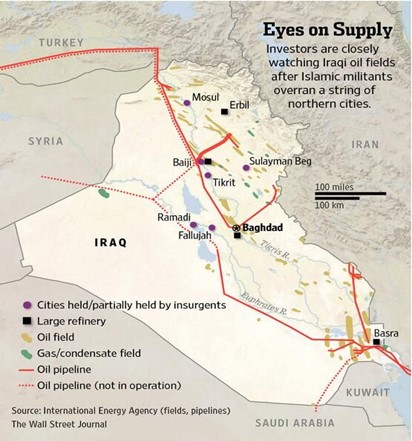
Therefore, Türkiye is proposing a new agreement, free of legal uncertainties and ensuring full capacity utilization, in place of this agreement. When operating at full capacity, the pipeline creates a potential trade opportunity of approximately $40 billion annually. This new agreement could diversify Iraq's export routes, currently concentrated south of Basra, to the Mediterranean and Europe. Achieving the pipeline's full capacity would require extending the pipeline further south. The Development Road Project offers an opportunity in this regard. Transforming the route into a broader energy corridor is being discussed within the initiative.[1] The Baghdad and Erbil administrations have reached a preliminary agreement to resolve the dispute.[2]
Türkiye's new energy cooperation initiative aims to establish a more holistic, flexible framework in the energy sector that fosters mutual cooperation. In this respect, the draft presented by Türkiye is not only a technical step, but also a strategic one, both diplomatically and economically. Despite these opportunities, the future of the new agreement will be directly dependent on the course of Baghdad-Erbil relations and Iraq's internal political balance, beyond the bilateral technical talks between Türkiye and Iraq[4].
Iraq-Türkiye Water Diplomacy
The management of transboundary waters should be viewed not only as a technical but also as a geopolitical issue in Iraq-Türkiye relations. The sharing of water resources in Iraq concerns issues such as energy, food, environmental security, socio-economic development, and social welfare. In southern Iraq, especially around Basra, decreasing river flows have resulted in increased salinity, reduced agricultural yields, and economic and social tensions among the local population. Therefore, despite several fundamental shortcomings, water diplomacy has persisted in Iraq-Türkiye relations and has recently made significant progress. The declining flow regime in the Tigris-Euphrates Basin creates the risk of a "slow-onset crisis," increasing the need for enhanced diplomatic cooperation.
Iraq has been experiencing extreme droughts in recent years and has occasionally requested additional water releases from Türkiye. Beginning in 2009, Iraq has repeatedly requested more water releases from Türkiye. Most recently, on July 1, 2025, following the visit of Iraqi Parliament Speaker Mahmoud Mashhadani to Ankara, Türkiye began releasing 420 cubic meters of water per second from the Tigris River. Türkiye meets Iraq's demands for additional water after droughts. This demonstrates the tangible results of water diplomacy between the two countries. However, the asymmetry between Türkiye's upstream location and hydropower investments, and Iraq's dependence on water, is a key determinant in shaping the diplomatic mechanism.
Conclusions
The Türkiye-Iraq Framework Agreement on Water and Energy Cooperation (2024) can be considered a significant step toward regional hydropolitical transformation, aligned with the "Oil for Water" model. However, the region's geopolitical landscape is not well-suited to the development of mutual trust and interdependence between countries and the establishment of hydropolitical initiatives. The speed and effectiveness of the agreements made within this scope depend on numerous regional and international factors. Issues such as institutional capacity differences and lack of coordination between the two countries, volatility in oil revenues, and the impacts of climate change can also be considered risks and challenges to progress.
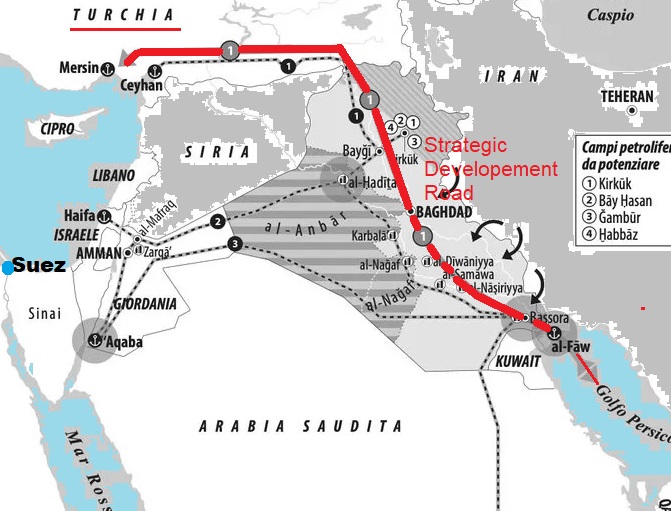
This agreement, when considered together with the Iraq-Türkiye-Europe Development Road project and the new and comprehensive energy cooperation agreement process between Türkiye and Iraq, offers the potential for an innovative hydropolitical initiative in Türkiye-Iraq relations. For the new hydropolitics and energy policy to be established through the energy-water nexus to be sustainable, concrete steps must be taken in regionalization and institutionalization. In this context, transparent data sharing, institutional continuity, and the rapid development of management tools based on climate change adaptation are also essential.
The innovative hydropolitics and energy policy initiative should be considered a strategic tool for Türkiye's Development Path Project and energy cooperation, and for Iraq, a rational cooperative step aimed at ensuring national security and social stability. Furthermore, the development and continuation of cooperation on water and energy nexus will be a significant development that will serve to ensure regional peace and stability.
Water management problems in the region, which will increase due to climate change, will not only be an environmental issue but will also impact Iraq's future, peace, and stability in the region through their political, economic, and social dimensions.
The region needs transboundary water management cooperation that comprehensively considers the nexus of water, energy, food, and environmental security. Therefore, instead of the traditional approach that focuses on water management for a single sector, an innovative Nexus approach is needed that ensures the overall security and sustainability of all resources.
The water and energy-related cooperation approach between Türkiye and Iraq should be shaped not only by releasing more water but also by establishing a broader vision encompassing the water-energy-food-environment nexus, sustainable water management, joint projects, water efficiency, technological cooperation, and energy and investment dimensions. This initiative has the potential to shift the classic model of water diplomacy from "resource sharing" to "resource management + energy partnership."
In these respects, the completion of this innovative cooperation process will constitute an exemplary model not only for the two countries but also for regional water diplomacy.
References
[1] “Iraq set to resume oil exports through Türkiye's Ceyhan port: Minister,” Türkiye Today, 6 Ağustos 2025, https://www.turkiyetoday.com/business/iraq-set-to-resume-oil-exports-through-turkiyes-ceyhan-port-minister-3205146.
[2] Laith Al Junaidi ve Tarek Chouiref, “Iraq, US hold talks on oil dispute in Kurdish region,” Anadolu Agency, 18 Ağustos 2025, https://www.aa.com.tr/en/energy/general/iraq-us-hold-talks-on-oil-dispute-in-kurdish-region/51195.
[3] Bekir Caner ŞAFAK 2025 Türkiye-Irak Ham Petrol Boru Hattı Anlaşması’nın Sona Erdirilmesi Yorum No : 2025 / 79 https://avim.org.tr/tr/Yorum/
[4] Feyzullah Tuna Aygün 2025 “Türkiye-Irak Enerji Sektöründe Yeni Dönemin Başlangıcı: Kapsamlı İş Birliği Arayışı” 31.07.2025 https://orsam.org.tr/yayinlar/turkiye-irak-enerji-sektorunde-yeni-donemin-baslangici-kapsamli-is-birligi-arayisi/
PDF VERSION OF THE ARTICLE


.png)


.jpg)


Yorumlarınızı Bizimle Paylaşın
Sadece üyelerimiz yorum yapabilir, hemen ücretsiz üye olmak için Tıklayın