

A Giant Step for Water Cooperation in Central Asia: Kambarata-1 HPP
- 21.07.2026
- Author:Dursun Yıldız
- (0) Comment
A Giant Step for Water Cooperation in Central Asia:
Kambarata-1 HPP
How would the Kambarata-1 HPP affect Hydropolitics and Water, Energy, Food, Environment Nexus in Central Asia?
Dursun Yıldız
C.E Hydropolitcs Expert (M.Sc.)
Hydropolitics Association,
Ankara-Türkiye
e-mail:dursunyildiz001@gmail.com
July 21 2026
Abstract
The Kambarata-1 Hydropower Plant (HPP) represents one of the most significant regional water and energy infrastructure projects in post-Soviet Central Asia. Beyond its role in renewable electricity generation, the project has the potential to transform hydropolitical relations in the Syr Darya Basin by promoting cooperative management of transboundary water resources among Kyrgyzstan, Kazakhstan, and Uzbekistan. This article examines the hydropolitical implications of Kambarata-1 within the framework of the Water-Energy-Food-Environment (WEFE) Nexus approach. It evaluates how the project can contribute to regional energy security, irrigation water regulation, climate resilience, and economic development while reducing long-standing upstream–downstream tensions over water allocation. The study argues that Kambarata-1, when operated in conjunction with the Toktogul Reservoir and supported by the planned Kazarman and Kokomeren cascade hydropower projects, could strengthen regional interdependence and facilitate a transition from traditional water-sharing arrangements toward a benefit-sharing model. The article further analyzes the project's contribution to transboundary cooperation, regional electricity trade, and integrated resource management in Central Asia. It concludes that Kambarata-1 is not merely a hydropower project but a strategic catalyst for enhancing WEFE Nexus implementation, advancing regional cooperation, and reshaping the hydropolitical landscape of the Syr Darya Basin over the coming decades.
Keywords: Kambarata-1 Hydropower Plant, Hydropolitics, WEFE Nexus, Water-Energy-Food-Environment Nexus, Syr Darya Basin, Transboundary Water Cooperation, Benefit Sharing, Regional Energy Security, Central Asia, Water-Energy Governance, Naryn River, Hydroelectric Development.
1.Introduction
The construction of the Kambarata 1 Dam in the Naryn River Basin in Kyrgyzstan (Fig.1) to increase upstream energy generation creates potential trade-offs with existing downstream irrigation, due to the different timing of energy and irrigation water demands. Some analysis, based on a hydro-economic optimization model, shows that cooperative basin-wide maximization of benefits would lead to large increases in upstream hydropower production and only minor changes in downstream irrigation.
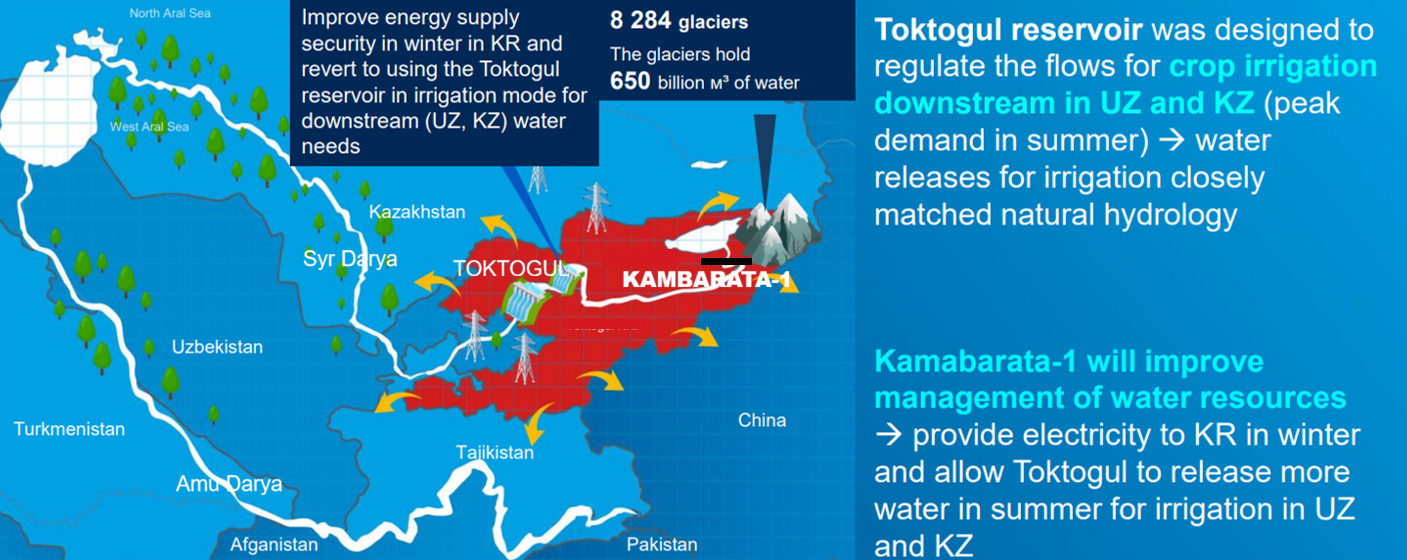
Figure .1 Naryn River Basin (https://www.worldbank.org/en/programs/kambarata-1-hpp)
There are currently few academic publications directly examining the hydropolitical impacts of the Kambarata-1 project, which is set to be constructed in Kyrgyzstan. The primary reason for this is that the project is still in its initial stages. However, studies published between 2023 and 2026 have made certain observations regarding the project (1).
An article by Nesmashnyi (1) emphasizes that while the Kambarata-1 and Rogun projects could enhance regional energy security, new hydropolitical tensions might arise without effective institutional cooperation. Furthermore, the article notes the need to strengthen the WEF Nexus approach. Dinara Ziganshina’s article (2) provides a detailed analysis of Kambarata-1’s emergence as a model for regional cooperation—involving Kazakhstan and Uzbekistan as partners—and examines it through the lens of a new "benefit-sharing" approach.
World Bank publications (3) state that Kambarata-1 is not merely an energy project but a piece of regional infrastructure designed to improve water-use efficiency in the Syr Darya Basin. They also highlight the development of a joint operational model for the project among Kyrgyzstan, Kazakhstan, and Uzbekistan.
The World Bank reports on the Kambarata-1 Hydropower Plant Project (2024–2026) (3) serve as one of the most up-to-date official sources explaining the project's impacts on regional water and energy security, water-energy-food interlinkages, and the joint operational model.
Additionally, the "Technical Assistance for Kambarata-1 HPP" report (World Bank) (7) provides a detailed examination of the project's environmental impacts, water management, operational scenarios, and regional effects. In World Bank reports (CAWEP – Central Asia Water and Energy Program, 2025) and the program's newsletter (Issue 4), the Kambarata-1 project is analyzed within the context of water security, energy security, and regional cooperation. Particular attention is paid to the project's role in complementing the Toktogul system and its impact on the water allocation regime in the Syr Darya Basin.
In CAWEP Newsletter (4) it is indicated that “CAWEP has been supporting the Kambarata-1 HPP Project (K1 HPP) for the Kyrgyz Republic that contributes to the program’s core objectives to strengthen water–energy cooperation, climate resilience, and investment readiness across Central Asia. The Kambarata-1 HPP sits at the nexus of these priorities: it is a key regional initiative aimed at enhancing energy security and improving the use of water resources in Central Asia. During the fall of 2025, stakeholders from across the Kyrgyz Republic and beyond came together to review and discuss the draft Environmental and Social Impact Assessment (ESIA) and Cumulative Impact Assessment (CIA) for K1 HPP. These stakeholder consultations are critical to ensuring”
To read the full article, please click on


.png)


.png)


.jpg)


Share Your Comments
Only members can comment, Click here to sign up for free right now